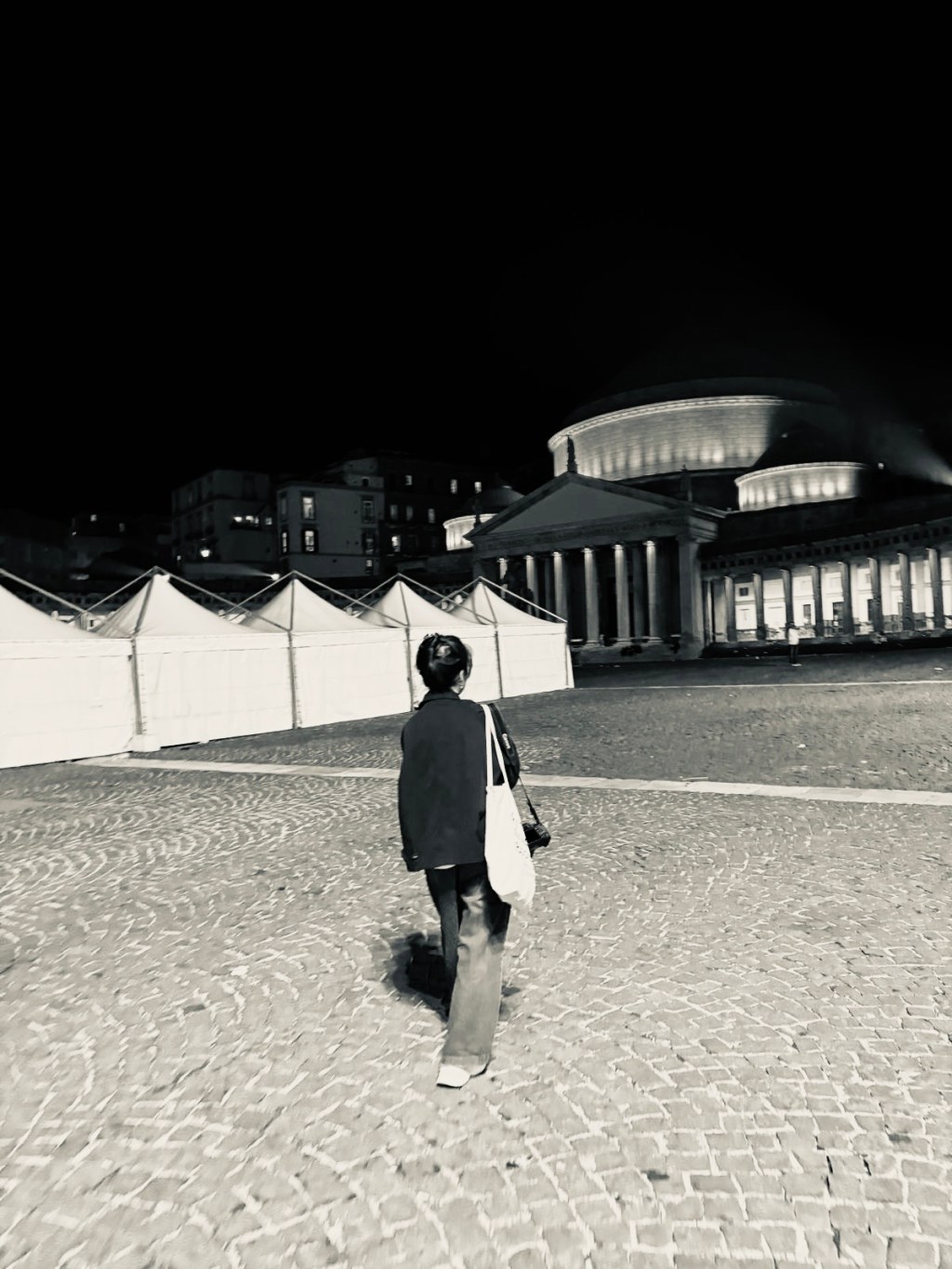
Why was it, that at exactly midnight on October 6, I thought, not about the wonders of the day ahead, but the last 26 years… 26 years of (family and friends aside) me, and me, alone?
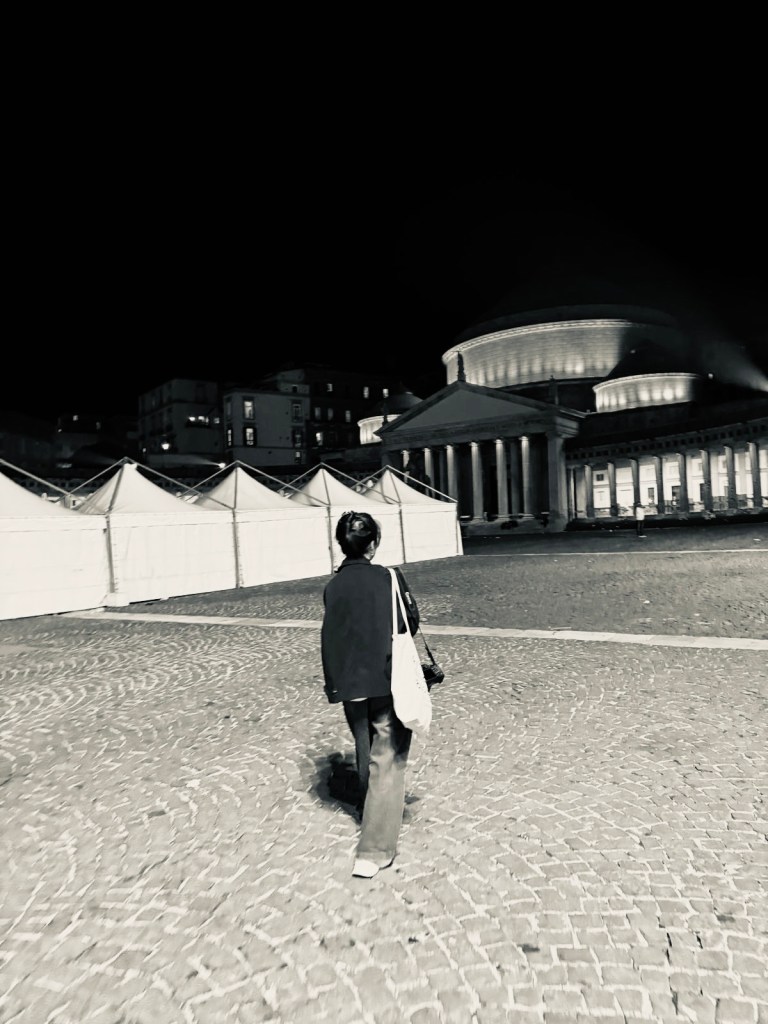
Being “lonely” vs being “alone”…
When I think about the difference between loneliness and aloneness, I see one as a feeling and the other, a choice. For a long time, whenever I’d see the words “lonely” or “loneliness”, I’d instantly think something negative. Whereas, when I’d see the word “alone” or “aloneness”, I’d immediately think, not so much something positive, but rather, something akin to contentment or calmness. For years, I’d see the two words, concepts, states of being – whatever you want to call them – as polar opposites. Two modes of existence that couldn’t coexist; you were either one or the other.
I no longer think like that. And I haven’t for a while.
It was the night before my 26th birthday, around 3 or 4am. I couldn’t sleep. Obviously. And it wasn’t out of excitement that I couldn’t sleep. Nor was it out of anxiety or fear of turning another year older. No. I couldn’t sleep because I was replaying the last 26 years (the ones I could remember) over and over in my head. The last 26 birthdays where it’s been, for better or worse, just me, myself, and I.
Of course, the last 26 years have been filled with the usual wonders of life – family, friends, travel, learning, laughter, and more – but they’ve also been filled with moments (more than I can count) where it’s been me, on my own. On my own, sometimes lonely, and at others, just, alone.
For years, I’ve been unconsciously trying to work out the difference between being “lonely” and being “alone”. In each and every moment where I have found myself thinking, I feel so lonely here or I’m quite happy being alone – oscillating between the two – I never truly realised that what I was doing was reconciling with the fact that I can exist, can live, rather, feeling and experiencing both, at once.
What kept me awake that night was the realisation – once sinking, once daunting – that I am both. I am lonely, and I am alone. And that is okay.
What does it mean to be both “lonely” and “alone”?
There’s a quote from The Great Gatsby that’s always stuck with me. It goes like this…
“…high over the city our line of yellow windows
must have contributed their share of human secrecy to the
casual watcher in the darkening streets, and I was him too,
looking up and wondering. I was within and without, simultaneously enchanted and repelled by the inexhaustible variety of life.” (39-40)
Notice those words, “within” and “without”. What do they mean? In this instance, Nick is using them to refer to (please excuse my A-level analysis here) his dual sense of being. Being in that apartment, he is within. Within the walls where socialites and millionaires rub shoulders, consequence-free. Being in that apartment, at that window, looking in to the other apartments, he is without. When he is inside, he can’t help but feel like an outsider; when he is outside, he can’t help but want to be inside. In short, Nick does not know what he wants. He does not know who he is.
Nick and I have very little in common. But one thing we do have in common, one undeniable similarity, is our propensity to overthink our position in the world. Who we are; what our place is; whether we are blending in or standing out like a sore thumb. Where Nick and I meet is in our acute sense of a “neither here nor thereness”. Our innate uncertainty. But that’s where our similarities end.
Enter, Gatsby.
It’s interesting… If you search for a PDF of The Great Gatsby online, use the “find” button and search for the word “lonely”, you’ll see that it’s only used twice. Whereas if you search for the word “alone”, you’ll see that it’s used 33 times. Now, I’m not going to sit here and try to infuse meaning into what is probably just pure coincidence, but it made me think…
Note this passage, for instance:
“…I didn’t call to him for he gave a sudden intimation that he
was content to be alone—he stretched out his arms toward
the dark water in a curious way, and far as I was from him I
could have sworn he was trembling.” (24)
Throughout the novel, Gatsby is seen “alone”. At the dock – where Nick first notices him – at his parties, at the window, at his pool… at his funeral. He is, in spite of his grand parties and multiple acquaintances, perpetually alone. But does that mean he is lonely, too?
The way I see it, Gatsby stands on the edge of that very fine line between loneliness and aloneness. He stands on the edge, with confidence. And that is where he and Nick differ.
Since TGG’s inception, scholars have and continue to unpack what exactly it is Gatsby is “stretching for” on that dock. A dream? Daisy? The green light? To stretch for the sake of stretching? We’ll never truly know. How I see it, at this point in my life, is that we shouldn’t focus so much on what Gatsby is stretching for, but rather, that he is stretching for whatever or whomever, completely on his own.
It seems to me that what keeps Gatsby company is his propensity to search. Whether it’s his search for a soulmate in Daisy, his search for a true friend in Nick, or his search for grandeur in the everyday, the simple act of searching is what sustains him, is what fills that hole – the one often filled by loneliness.
Searching: A universal remedy for loneliness…
What does it mean to “search”?
The search for a cup with which to hold your morning tea; the search for a playlist to sustain you on that long-haul flight; the search for a realistic nighttime routine; the search for a coffee shop (the one with friendly baristas and big windows for people-watching); the search for a person with whom you can share your deepest secrets; the search for a place that you can comfortably and confidently call, “home”.
The search for a life that has some sort of meaning.
Whether we are aware of it or not, we are all on some sort of search. Only in the last 2 to 3 years have I really started paying attention to what it is I am searching for. Each time I go searching for something, whether it be for something small or insignificant, like a piece of jewellery, or something large or significant, like a new job, I do it all with intention.
Despite this tendency of mine backfiring now and again – i.e. when things don’t go as planned and feeling soul-crushed as a result – this tendency is what bridges the gap between loneliness and aloneness.
I search, therefore I am…
Start small.
I can’t pinpoint the exact moments that I have felt hopelessly lonely. Those moments just were. What I can pinpoint – again and again – are all (or most) of the moments that I have felt unequivocally okay with being alone.
Sitting in a bar in Florence after a day of exploring, I had honed in on one stark fact: everyone else was exploring with someone. A friend, a partner, a family member. Someone else. I had tried washing the day – the loneliness – off before heading out, but the feeling still lingered. That feeling – somewhere between awkwardness and suffocating self-awareness – was more oppressive than the August heat. I was too far away and too hungry to go home, so I decided to get tipsy. Or try to. A few spritzes and I’ll get out of my head, I thought. I was wrong. If anything, I became even more painfully self-aware.
I walked to the next place: a beautiful, quintessentially Italian bar, unassuming yet elegant. If I’m going to drink alone, I reasoned, I might as well do it somewhere pretty. I sat down, ordered another spritz, and opened my book, but the words wouldn’t stick. The only thing I could focus on was the party of eight next to me. Eight friends, clad in linen shirts and smoking like their lives depended on it. Eight friends talking about politics, love, annoying neighbours, and, of course, each other. Eight friends whose effortless togetherness made me hyper-aware of my natural aloneness.
I was so hyper-aware, in fact, that it wasn’t until the lady in the apartment above us watered her plants – and by extension, us – that I noticed another woman had sat right beside me.
She was on her own, too.
‘Can you understand what they’re saying?’ she asks.
‘A little,’ I respond.
‘Oh, you’re lucky! I’ve been so lost this holiday!’
I smile.
‘My daughter speaks a little Italian,’ she says (her accent: Canadian). ‘This is my first trip without her.’
‘And how have you found it so far? Being without her?’ I inquire.
‘Honestly? I’ve managed just fine,’ she continues. ‘I’ve seen some amazing things, eaten some of the best food I think I’ll ever eat in my life, drank wine in front of ancient monuments,’ she pauses, ‘I’ve managed just fine.’
‘That’s great,’ I smile. She’s holding back about something.
‘But it gets to this time…’
I shift my chair closer to her. Slightly.
‘It gets to this time, around 7pm, nighttime, and I wish she was here with me,’ she looks at my book.
‘I know what you mean,’ I reply.
She smiles and I don’t know what to say. I opt for a cliché…
‘How old is your daughter?’
The woman looks at me. ‘She’s about your age.’
We smile at each other.
She tucks into her olives.
I turn away from the group of eight.
I restart my chapter; I get lost in the words.
I’m back in my little world.
Childhood’s Retreat – Robert Duncan
It’s in the perilous boughs of the tree
out of blue sky the wind
sings loudest surrounding me.
And solitude, a wild solitude
’s reveald, fearfully, high I’d climb
into the shaking uncertainties,
part out of longing, part daring my self,
part to see that
widening of the world, part
to find my own, my secret
hiding sense and place, where from afar
all voices and scenes come back
—the barking of a dog, autumnal burnings,
far calls, close calls— the boy I was
calls out to me
here the man where I am “Look!
I’ve been where you
most fear to be.”

 Writings of a Dreamer
Leave a comment